

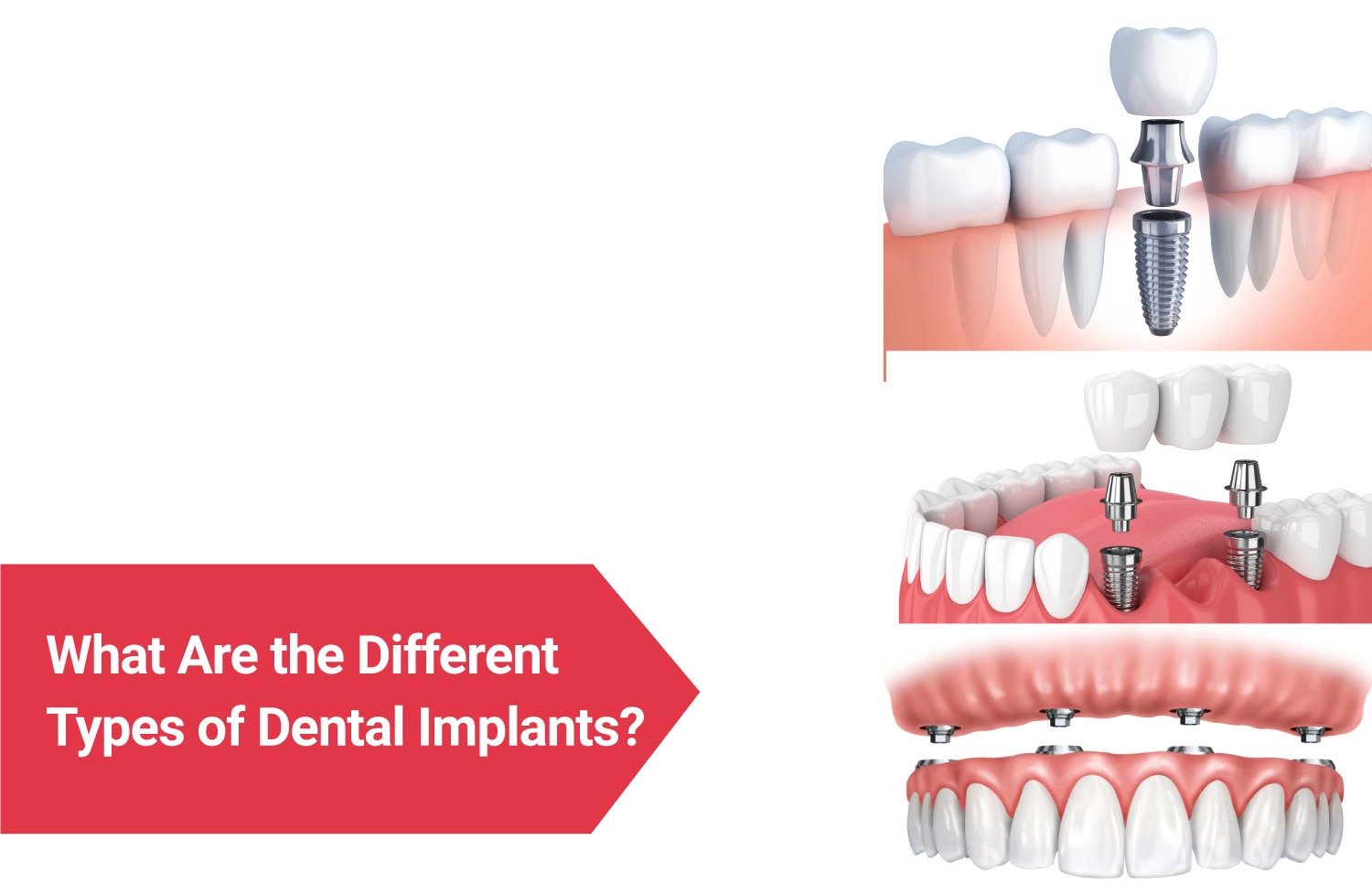
Tooth loss can have an impact on one's appearance as well as daily activities. Dental implants in Ahmedabad are the most effective therapy for lost teeth, providing a strong and long-lasting replacement. Dental implants are utilized to imitate your natural tooth roots and serve as a foundation for artificial teeth (crowns, bridges, and dentures). Patients should be aware of the many options for dental implants.
An implant is a little metal post made of titanium that is screwed into your jawbone and supports the prosthetic tooth. It replaces a missing tooth root. The implant fuses with the bone over a process known as osseointegration, which occurs naturally over several months. Dental implant surgery consists of three stages, where dental implants serve as a solid base for an artificial tooth.
This treatment is often provided in cycles. The implant is lodged in the lower jaw. The implant is then joined to an abutment, which is subsequently bonded to a crown when it has healed. Following each phase, interim restorations are utilized to preserve the underlying tooth or teeth while a permanent, custom-designed crown is created and fitted.
Not every patient has the same experience with dental implants. Depending on the condition of your bone, how many teeth are missing, and your overall oral health, different types of implants will be suitable.
Endosteal implants are the most widely used variety. These are typically directly placed into the jawbone.
They are found in the form of small screws or cylinders. It heals strongly and stably as bone grows around it after placement. After the healing process is over, a crown or bridge will be affixed.
This type is normal for patients who have healthy jawbone density and sufficient bone to support the implant.
Subperiosteal implants are put behind the gums but above the jawbone. They rest on top of the bone rather than being implanted into it.
A metal skeleton is used, with posts inserted through the gums to support the false teeth. This type of implant is typically utilized for persons who have insufficient bone height and are not eligible for a bone transplant.
Not as prevalent these days, although it may still be useful in specific situations.
Zygomatic implants are currently of a more complex type. They are anchored in the cheekbone (zygomatic) rather than being relied on to stay stable within the jawbone.
It is applied when there is extensive bone loss in the upper jaw. Because the cheekbone is denser, it can provide strong support for an implant.
This procedure requires special training and is typically done only in advanced cases.
Dental implants can also be categorized by the number of teeth they are replacing.
A single implant replaces a single lost tooth. Includes one implant post and one crown. It functions and looks like a natural tooth, and doesn’t impact nearby teeth.
If more than one tooth is missing, implants can also support a bridge. Rather than installing an implant for each tooth, some implants can support multiple teeth.
This technique minimizes the number of implants required while providing adequate support.
Dentures are used when all the teeth in the upper or lower jaw are missing. Multiple implants support a fixed denture.
Implants do not suit everyone. A person also needs healthy gums and enough bone to support the implant.
Smoking, uncontrolled diabetes, or bad oral hygiene can also affect the success of the treatment. Additional treatments may be needed before getting an implant in some cases, such as bone grafting.
Dental implants have proven to be a key solution for replacing teeth. implant components are endosseous, subperiosteal & zygomatic implants. Selection depends upon the condition of the bone structure, the number of missing teeth, and the patient's health.
At Karnavati Multi-Speciality Dental Care - Dr. Ankit Bhagora, expert dentists do not advise dental implants without properly examining the concern. Different types work in different ways, and knowing that helps patients choose the one that is best suited to them.